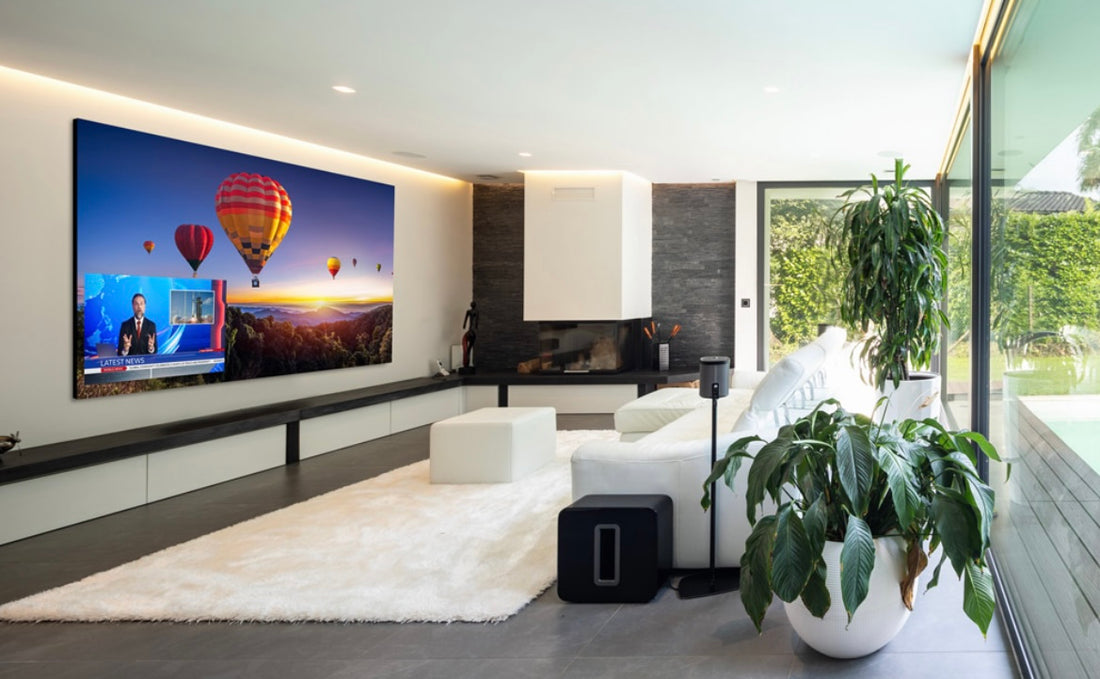
Lights down. Theater up.
Dedicated cinema rooms and media spaces — from large-format OLED to full direct-view LED walls, with Dolby Atmos overhead and seating you'll still want to sit in three hours later.
Media room or dedicated cinema. We build both.
The right answer depends on the room you have and whether you want a multi-use space or a single-purpose cinema.
Media room
Large OLED or a wall-sized LED panel that holds up with the lights on. 5.1.2 or 7.1.2 Atmos, comfortable seating, doubles as the room you actually live in.
Dedicated cinema
Single-purpose room with acoustic treatment and a direct-view LED wall sized to the seating. 7.1.4 or 9.1.6 Atmos, Salamander or CinemaTech seating on a riser.
Two ways to put a picture on the wall.
We start with how the room is used and how much light it has — then specify the technology that fits.
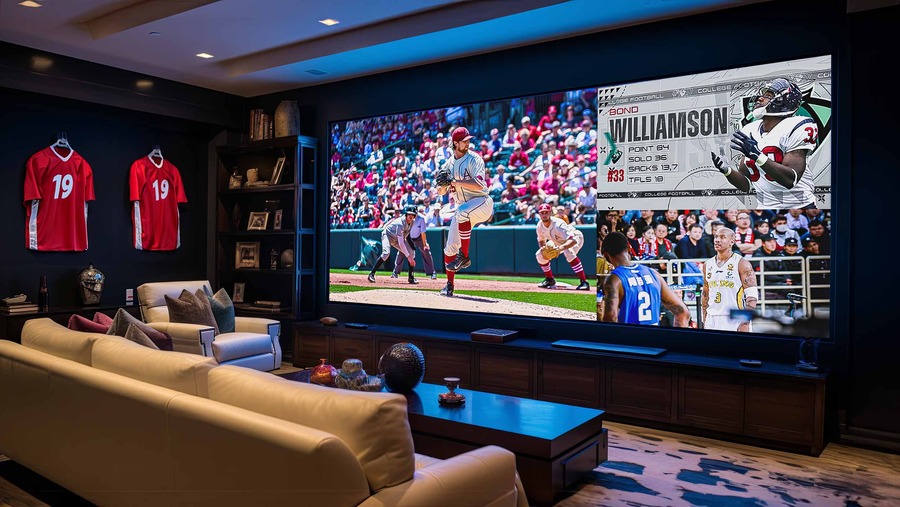
Direct-view LED wall
AWALL MicroLED, Samsung The Wall, LG MAGNIT, or Sony Crystal LED — seamless emissive panels from ~75″ past 290″, OLED-deep blacks, 1,000+ nits of HDR headroom. P1.5–P1.9 for value tiers, P0.9–P1.2 for reference. Real investment range: $40K–$100K+ installed. Wall structure, dedicated power, and an LED processor are part of every install.
Large-format OLED & MicroLED TVs
Sony Bravia 8 II, LG OLED G/Z, Samsung Neo QLED 98″ — 75″ to 98″ of dialed-in picture. The honest entry point into a real cinema build.
Why MicroLED is the new cinema standard.
We install AWALL Series MicroLED walls alongside Samsung, LG, and Sony. Here's what makes the technology worth the wall it goes on.
Chip-on-Board (COB) tech
Sub-millimeter pixel pitches down to 0.7 mm. COB is more durable than SMD, handles heat better, and gives you a denser, more vibrant image up close.
Seamless modular design
Cabinets connect edge-to-edge with no visible bezels. Wall-mounted, floor-stacked, or hung from above — we shape the array to the room, not the other way around.
Multi-view, side by side
Run the game, the news, a stream, and a movie on the same wall at once. Lay them out however you want and resize on the fly.
No burn-in. 100,000-hour life.
MicroLED has no organic compounds to degrade. No bulbs to swap, no panel refresh cycles — the wall you put up today is the wall you'll watch a decade from now.
Brightness for any room
600–2,000 nits peak. The wall holds up in rooms with daylight, not just blacked-out cinemas. HDR delivers cinema-grade peak highlights with no washout.
Calibration & support
Every install ships with an H2 video processor, mounting kit, and the calibration tools we use to dial it in. U.S.-based support stays with the system after move-in day.
A diagonal for every wall.
If your room calls for it, the panels scale to fit — media rooms, living rooms, or dedicated cinemas.
Every other layer of a theater, designed together.
Sound — Dolby Atmos
5.1.2 for media rooms, 7.1.4 for dedicated cinemas, 9.1.6 for reference. James Loudspeaker, Sonance Reference, or Triad behind acoustically transparent screens; dual subs for even bass.
Acoustic treatment
First-reflection absorption, rear-wall diffusion, corner bass traps, acoustically transparent fabric over the front baffle. The room is half the system.
Seating & risers
Salamander or CinemaTech in motorized leather. Two-row builds get a proper riser so every seat sees over the front.
Source & processor
Trinnov, StormAudio, or Marantz Cinema processor. Kaleidescape for reference playback; Apple TV 4K, Roku Ultra, and 4K Blu-ray for everything else.
Lighting & automation
Lutron scenes for “movie,” “credits,” and “intermission.” One button dims the room, drops the screen, and starts the show.
The room is the most important component.
A reference display in an untreated room sounds worse than a mid-tier system in a properly treated one. We start with the room: wall construction, isolation, HVAC routing, and a riser cavity that adds bass-trapping volume.
New builds: we work from the framing stage. Retrofits: a second layer of drywall with Green Glue, sealed door, and acoustic treatment behind fabric panels.
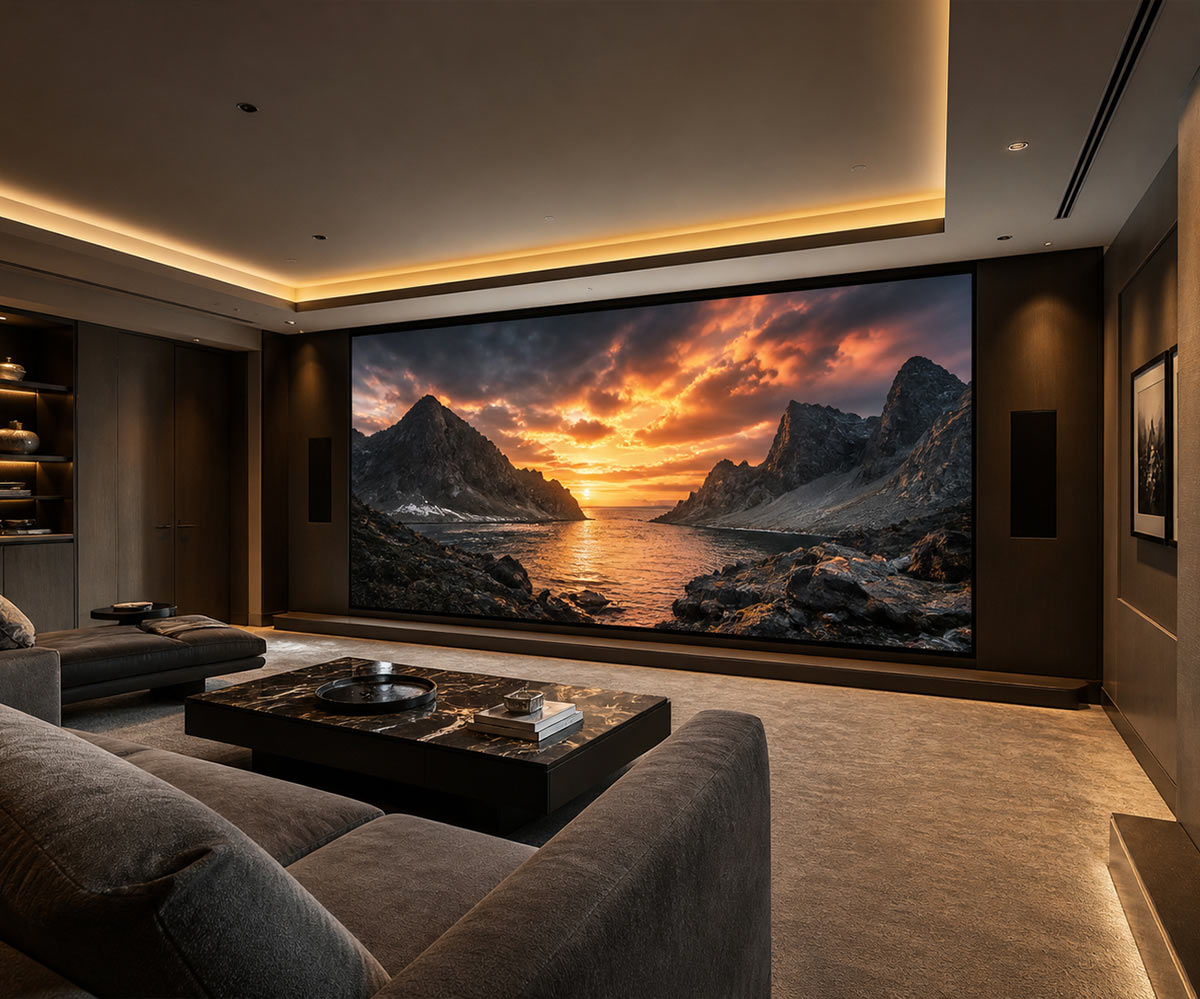
- Isolation. Double-stud walls, resilient channel, sealed door — the movie stays inside.
- Geometry. Display size, viewing distance, and seating rows planned before drywall.
- HVAC. Quiet supply through a baffle box. No whoosh during dialogue.
- Sightlines. Every seat sees the full screen.
- Wiring. Speaker, HDMI, power, network in conduit you can re-pull later.
- Light control. Black ceiling, dark surfaces, no glare paths.
From media room to flagship cinema.
A media room you'll actually use every week.
- 75–98″ OLED TV (Sony Bravia, LG OLED, Samsung)
- 5.1.2 Dolby Atmos — in-ceiling height speakers
- Marantz Cinema AVR + dual subs
- Streaming sources (Apple TV, Roku)
A dedicated theater room, properly treated.
- Direct-view LED wall, P1.5–P1.9 pitch, ~110–150″ diagonal (Samsung The Wall / LG MAGNIT / Sony Crystal LED)
- 7.1.4 Atmos with in-wall front stage
- Acoustic treatment + sealed door
- Salamander motorized seating, single row
Reference-grade cinema. Built from the framing out.
- Direct-view LED wall, P0.9–P1.2 pitch, 180″+ diagonal (Samsung The Wall / LG MAGNIT / Sony Crystal LED)
- 9.1.6 reference Atmos + full acoustic treatment
- Trinnov processor + Kaleidescape
- Two-row CinemaTech seating on a riser
Let's plan your theater.
Bring the room. We'll bring the design.
Start the conversation